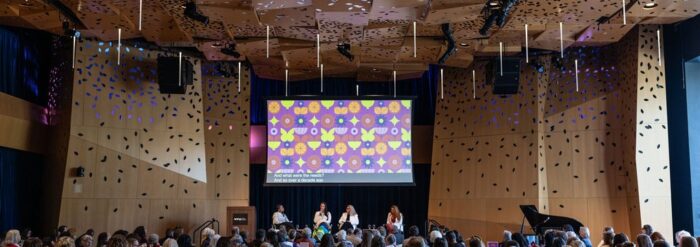
Research is the Catalyst for Policy Action
Our work is grounded in knowing that investing in women now benefits children, families, and the entire community in the long term. Each item on WFM’s policy agenda is informed by listening to statewide communities and the Status of Women & Girls in Minnesota, comprehensive research we produce every other year with the Center on Women, Gender, & Public Policy at the University of Minnesota Humphrey School. At the Women’s Foundation of Minnesota, research is the catalyst for action.

The Women’s Foundation has invested in research for more than 35 years to inform our annual grantmaking and policy agenda and increase resources for women and girls across Minnesota.The data shows the evidence of disparities, and where we must invest in community-led solutions to close gaps and improve outcomes. Throughout session, we testify at the Capitol, submit letters of support and opposition for bills, and support our coalition partners with their lobby days.
Safety
This session, we have supported efforts to increase funding for Crime Victim’s Services and to prevent gun violence, following the lead of domestic violence advocates and survivors. The consequences of gender-based violence, whether witnessed or personally experienced, include poor mental health outcomes, chronic disease and health problems, unwanted pregnancy, substance abuse, homelessness, lost economic productivity, and a lack of personal freedom, as cited in the Status of Women & Girls.

We joined lobby days with partners in safety, many of whom use Status data to advocate, including for the Office of Missing & Murdered Black Women & Girls and In Solidarity We Rise, with anti-violence coalitions – Violence Free Minnesota, Minnesota Indian Women’s Sexual Assault Coalition, Mending the Sacred Hoop, Minnesota Children’s Alliance, Minnesota Alliance on Crime, and Minnesota Coalition Against Sexual Assault. These groups use research to, among other things, back up powerful narratives from their direct service members.
Health
WFM’s Status of Women & Girls in Minnesota is clear: quality healthcare is often out of reach for women and their families. Health inequities for Black, Indigenous, and women and girls of color, LGBTQ+ people, and rural and girls lead to significant differences in health care access, quality, and outcomes in Minnesota.
In a press conference for the Status of Women & Girls at the Capitol, Sen. Alice Mann said, “We are here today because women represent 50% of the population and yet we are still fighting for equal representation and access to all arenas from healthcare to workforce, equal pay to our basic safety. Every year we have to write new legislation requiring healthcare companies to pay for services for women. Breast cancer care, cervical cancer screenings, birth control coverage. In 2026, we are still asking health insurance companies to cover the healthcare that women need and are paying for but cannot get.”
As part of our policy agenda, WFM supports increasing the responsibly of insurers by requiring them to provide coverage for women’s basic healthcare, including contraception. This includes SF1961, a bill that requires health plans to cover infertility treatment and fertility preservation treatment.
We also support legislation to increase access to reproductive and mental health care throughout Minnesota. The report shows that approximately 80% of Minnesota counties have a shortage of mental health professionals. Statewide, only 27% of the demand for mental health professionals in Minnesota is met.
Economics
Economic priorities support the building blocks of economic security, such as pay equity, education and training, stable living-wage jobs with benefits, and the ability to build wealth requires access to affordable and reliable caregiving supports such as child care, elder care, and paid leave. Protecting Paid Leave and increasing access to high-quality, stable childcare are on this year’s agenda, along with passing the Equal Rights Amendment, which would enshrine our commitment to freedom, fairness, and equal rights in our constitution.
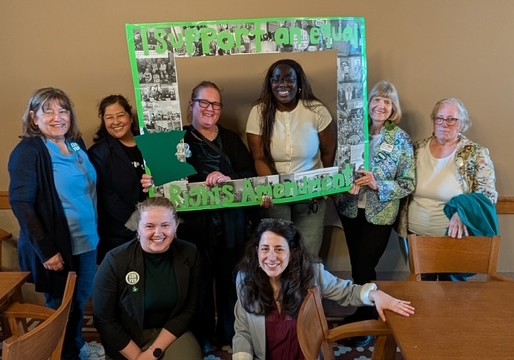
WFM is a member of the Minnesotans for Equal Rights Coalition and the goal is to get the ERA on the ballot so that Minnesotans can vote. The ERA states that all persons shall be guaranteed equal rights under the laws of this state and shall not be discriminated against on account of race, color, national origin, ancestry, disability, or sex, including pregnancy, gender, and sexual orientation. Thirty-eight states have enshrined equality language in their state constitutions.
The Status of Women & Girls shows that the gender wage gap in Minnesota hasn’t narrowed over the past decade. On average, Minnesota women make 81 cents for every dollar a man makes—and for Black, Indigenous, and women of color, it’s even lower. If you add that up over a lifetime, a woman in Minnesota loses almost half a million dollars across the course of her career—and a woman of color loses more than a million. As just one example of its potential impact, a Minnesota Equal Rights Amendment would give us a strong tool to combat gender-based wage discrimination in Minnesota.
We know from our research in our Status of Women & Girls in Minnesota report, and from listening to communities that family and medical leave is key to long-term success for both individuals and for the greater economy as it actually leads to increased productivity and labor force participation. Research shows that access to paid family leave increases the likelihood that workers will return to their jobs instead of dropping out of the labor force entirely. Mothers with access to leave can also have a positive impact on their children’s health and development.
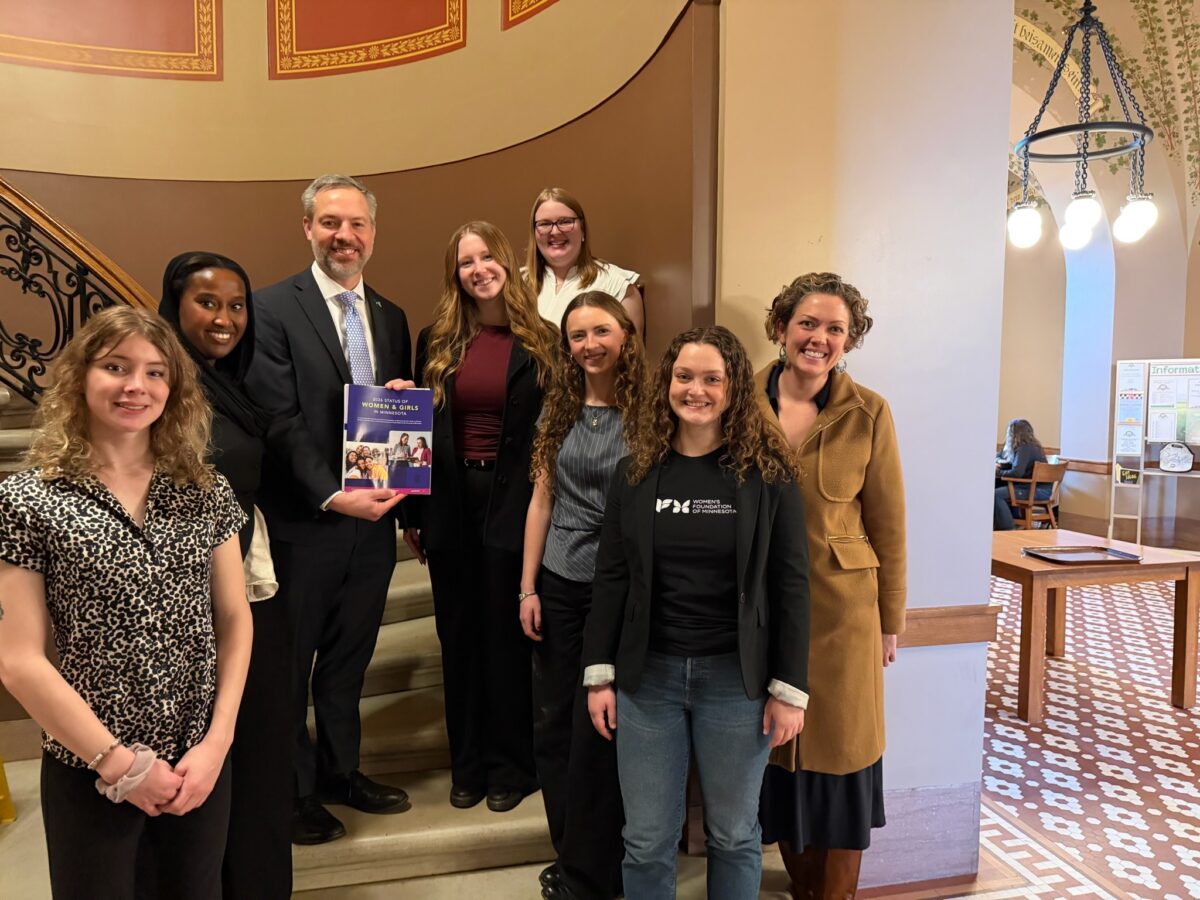
Many of Minnesota’s mothers are the primary breadwinner in the family: 55% of Black mothers, 52% of Native American mothers, 38% of Latina mothers, and 36% of white and Asian mothers are the heads of their households, and yet their work is not only poorly compensated – it lacks basic benefits.
The Status data also shows: Women are concentrated in low-wage occupations, like service industries, where benefits are scarce, work is hard, and pay is low and women of color dominate these fields.
Barbara Ehrenreich called the women in low-wage occupations anonymous donors to society for what they personally sacrifice to work in these sectors. To achieve economic security and a fair economic playing field, we must value the work and the roles that women provide by compensating – at minimum – our right to take a leave and return to the workplace without financial penalty or loss of opportunity.
We continue to invest in research and listening to understand and share the experiences and solutions of communities. By understanding the systemic barriers, we can target our advocacy and grantmaking toward transformative solutions that build civic, cultural, and political power with those most impacted by injustice.