Increasing Health Access & Services at the Capitol
WFM’s Status of Women & Girls in Minnesota research with the Center on Women, Gender, & Public Policy at the Humphrey School is clear: quality healthcare is often out of reach for women and their families. Health inequities for Black, Indigenous, and women and girls of color, LGBTQ+ people, and rural and girls lead to significant differences in health care access, quality, and outcomes in Minnesota.
Reducing health disparities and increasing positive health outcomes for all Minnesota women and girls is a foundation of WFM’s annual policy agenda. This session, our policy agenda in health calls to:
- Pass the Perinatal Mental Health Access and Accountability Act (HF 35/SF 1085)
- Protect the Sexual and Reproductive Health Services grant fund
- Increase access to reproductive and mental health care throughout Minnesota
Minnesotans should have access to the services required to support healthcare decisions for themselves and their families. As part of our policy agenda, WFM supports increasing the responsibly of insurers by requiring them to provide coverage for women’s basic healthcare, including contraception. This includes SF1961, a bill that requires health plans to cover infertility treatment and fertility preservation treatment.
This bill would ensure comprehensive coverage for diagnosis, treatment, and fertility preservation, helping remove the cost barrier and subsequently recognizing infertility as a medical condition deserving of quality, accessible care.
Access to Reproductive & Mental Health Care
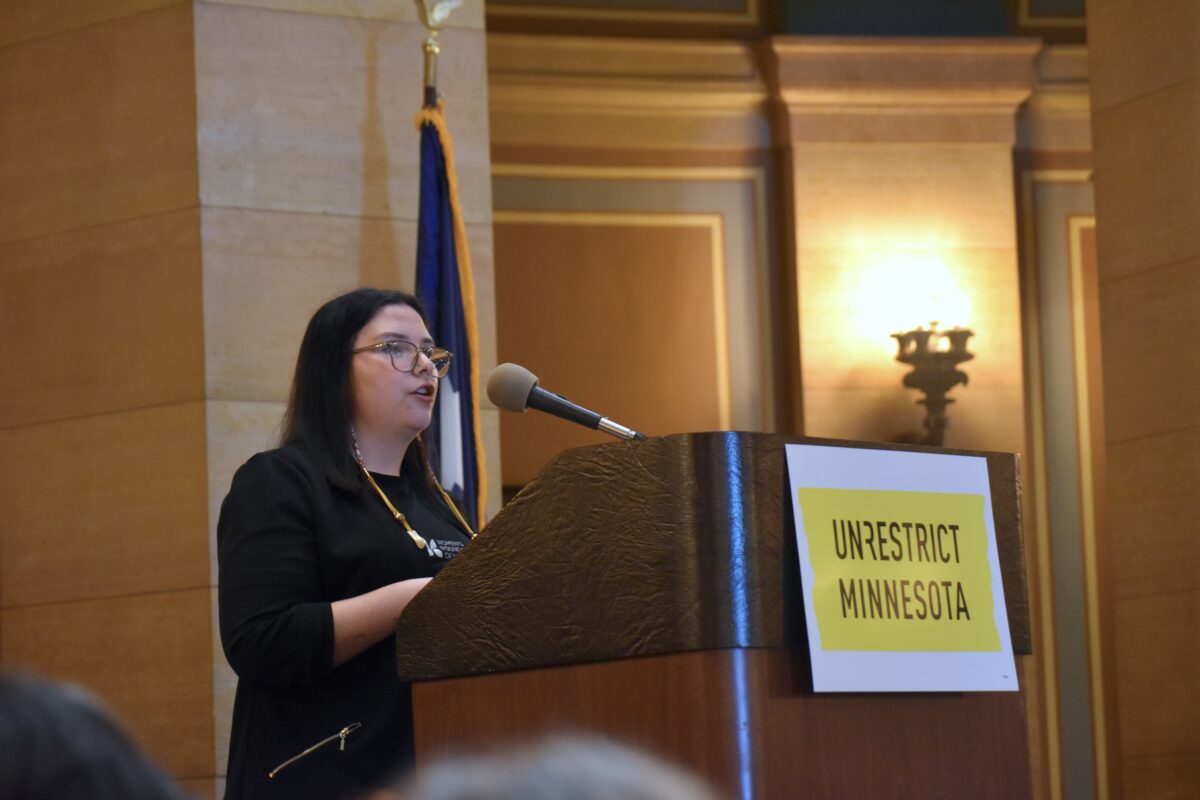
At UnRestrict Minnesota’s Reproductive Freedom Lobby Day, Young Women’s Cabinet member Sheridyn Runs After spoke powerfully about the importance of bodily autonomy shared. She said, “Our strength has always been collective, so today I want to remind you to challenge the systems that have failed our communities, listen to the voices that have been ignored for far too long, and commit to building a future where bodily autonomy is not just conditional, it’s actually something real.” WFM helped plan the event and joined supporters who are fighting to protect, expand, and destigmatize abortion care and all reproductive health care in our state. Participants met with legislators to advocate for insurance coverage for reproductive care and protections against anti-abortion measures.
In 2025, WFM created the Reproductive Freedom Fund to resource organizations and efforts that provide health care across Minnesota, now and in perpetuity. Each year, five $50,000 grants invest in programs that increase access and expand reproductive justice, which includes the human right to maintain personal bodily autonomy, have children, not have children, and parent the children we have in safe and sustainable communities, in addition to advocacy for reproductive justice as it intersects with race. As part of each grant, $10,000 is dedicated to supporting staff wellness and development.
In a press conference for the Status of Women & Girls at the Capitol, Sen. Alice Mann said, “We are here today because women represent 50% of the population and yet we are still fighting for equal representation and access to all arenas from healthcare to workforce, equal pay to our basic safety. Every year we have to write new legislation requiring healthcare companies to pay for services for women. Breast cancer care, cervical cancer screenings, birth control coverage. In 2026, we are still asking health insurance companies to cover the healthcare that women need and are paying for but cannot get.”
Maternal Mental Health
Mental health conditions manifest differently in women and men due to social and biological factors, begin early, and persist across the lifetime at a rate that is often twice as high as it is for men. The Status of Women & Girls in Minnesota reveals that depression is an important mental health risk for many older women. More women (30%) than men (16%) report having had depression at some point during their lives, and mental health conditions are often twice as likely across age groups in Minnesota. Alarmingly, 60 percent of ninth-grade girls have seriously considered attempting suicide while two-thirds of college women in our state have reported a mental health diagnosis in their lives, and 20 percent of women 65 and older have reported depressive symptoms.
Pregnancy and new parenthood can be a time of beauty and stress, joy and pain, personal growth and stifling isolation. And yet, an estimated 75% of women impacted by a maternal mental health disorder do not receive the treatment they need. The state’s rate of pregnancy-related deaths is higher than the national rate.
Minnesota’s Department of Health Maternal Mortality Report found that 31.9% of maternal deaths between 2017-2021 were caused by mental health conditions. The same report notes that mental health issues (including substance use disorders) as a cause of pregnancy-associated fatalities have risen when compared to other prevalent causes of death.
According to the Maternal Mental Health Leadership Alliance, maternal mental health conditions are the most common pregnancy and childbirth complication. Whether you know it or not, someone in your life has struggled with their mental health during or after their pregnancy.
HF 35/SF 1085 would require health plans to establish Maternal Mental Health Programs, to expand screenings, align with HEDIS quality measures, provide provider training, and create a centralized referral network. By streamlining care and reducing provider burden, this initiative will help more mothers access the critical support they need. By requiring screenings as a routine part of perinatal care, it removes the shame and stigma a patient might feel in asking for help and increases the likelihood that emerging issues will be flagged earlier, with lifesaving benefits and savings. When health plans connect providers to resources, it breaks down the access barrier that challenges rural communities, communities of color, and those living in poverty.
Barriers to maternal mental health care still exist. Along with stigma and cost, accessing mental healthcare providers can be incredibly difficult to do on your own. Our 2026 Status of Women & Girls report shows that approximately 80% of Minnesota counties have a shortage of mental health professionals. Statewide, only 27% of the demand for mental health professionals in Minnesota is met.
Path to Progress
In letters of support over the 2025-2026 biennium the Women’s Foundation has shared how supporting essential care like vasectomies, over-the-counter contraception, maternal health screenings and the collaborative care model in health coverage means positive health outcomes for all Minnesota families. Closing gaps in coverage for sexual, reproductive, and mental health is a necessary part of valuing women’s healthy and whole lives.
Additionally, supporting policies that increase funding or incentivize investment for women’s health research, data collection, and development will ultimately improve the quality of care women receive for their unique health needs. Currently, Women’s Health Advocates reports that only 2 percent of large-cap pharmaceutical research is in women’s health innovation and only 8-11 percent of NIH grants fund women’s health.
What You Can Do
As defined by the World Health Organization, health is not merely the absence of disease or infirmity but must also be inclusive of complete physical, mental and social well-being. We are grateful to the authors and the co-authors of these health bills for bringing them forward and for their continued work to create and pursue policies that will make Minnesota safer for women and girls.
Reach out to your elected representatives and ask them to support bills that increase insurance coverage and reduce women’s health disparities in medical data gathering, clinical trials, and research and development so that we can get closer to a healthier Minnesota for all.